
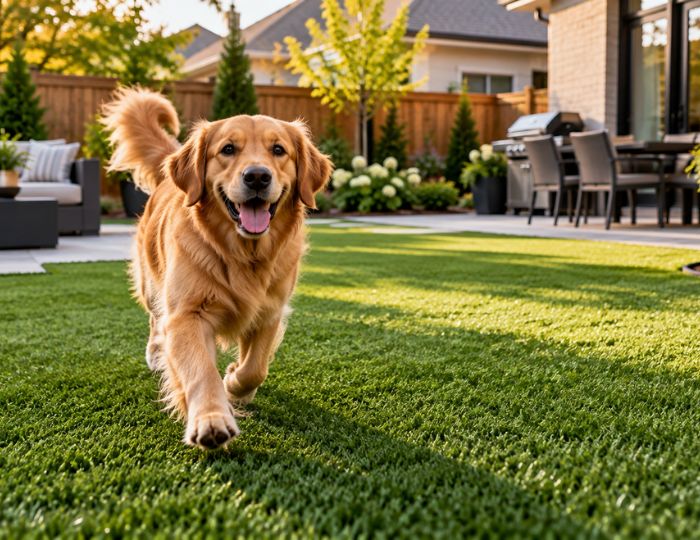
Dogs and beautiful natural lawns don’t always get along.
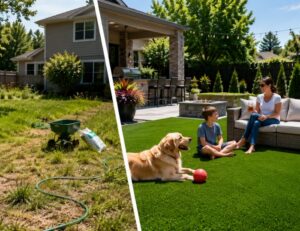
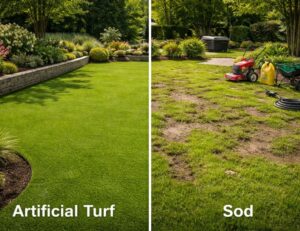
Running creates worn paths. Digging damages grass. Repeated trips to the same areas can leave bare spots. Rain transforms those bare areas into mud, and that mud eventually finds its way onto paws and into the house.
For homeowners tired of constantly repairing their lawn, artificial turf can offer a different approach.
A properly planned turf installation can create a consistent outdoor surface for both pets and people while reducing many of the lawn-care headaches associated with traditional grass.
Here’s what dog owners should consider before making the switch.
Why Dogs Can Be Tough on Natural Grass
Dogs don’t understand that the newly seeded corner of your yard needs a few weeks without foot traffic.
They run where they want to run.
Over time, homeowners may notice predictable paths developing along fences, between doors and gates, or around other backyard features.
Larger or highly active dogs can accelerate the wear.
Weather compounds the problem.
When grass becomes thin, soil becomes exposed. Add Illinois rain or melting snow and those sections can become muddy quickly.
Homeowners already considering alternatives can compare the broader differences in our guide to artificial grass versus natural grass in Illinois.
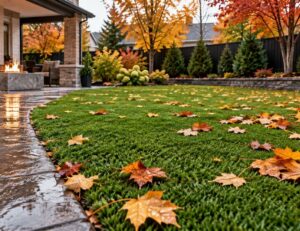
Artificial Turf Eliminates the Muddy-Paw Problem at the Source
You can keep towels near the back door.
You can wipe paws after every trip outside.
You can reseed bare sections of lawn.
But as long as your dog has access to exposed wet soil, muddy paws are always a possibility.
Artificial turf changes the surface itself.
Instead of dogs running directly over soil and living grass, they use a turf surface installed over a prepared base.
That can significantly reduce the amount of mud they track into the house.
For homeowners who use their yards frequently, that benefit extends beyond pets. A cleaner, more consistent surface can also make the backyard more enjoyable for the rest of the household.
Our article covering year-round outdoor living with artificial turf explains some of these broader benefits.
Drainage Is Especially Important for Pet Turf
Pet-friendly turf isn’t only about choosing artificial grass.
The entire installation matters.
Rainwater, snowmelt, and other moisture need an appropriate drainage path.
That makes the preparation beneath the visible turf particularly important.
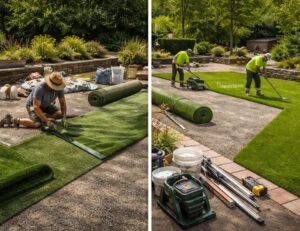
Professional Installation Matters
The backyard needs to be evaluated as a complete environment.
Existing drainage, grading, intended use, and site conditions can all affect how an artificial turf project should be approached.
Cutting corners beneath the surface may create problems that aren’t immediately obvious when the installation is new.
That’s why we encourage homeowners to understand the difference between DIY and professional artificial turf installation.
The turf you see is only the finished layer of the project.
What Happens When a Dog Uses the Bathroom on Artificial Turf?
This is one of the first questions pet owners ask.
After all, a backyard still needs to function like a backyard.
Solid pet waste should be picked up, just as it would be from a natural lawn.
Routine cleaning and appropriate maintenance can help keep the turf area in good condition.
The key is recognizing that artificial turf is low maintenance, not no maintenance.
Pet households may need a different cleaning routine from a backyard that receives very little traffic.
Frequency will depend on factors such as the number of pets, size of the turf area, and how heavily particular sections are used.
Homeowners can learn more about general upkeep in our guide to artificial turf lifespan and maintenance.
Artificial Turf Can Handle Repeated Traffic
Dogs are creatures of habit.
Many run the same routes every day.
A natural lawn may eventually reveal those routes as worn trails.
Artificial turf is designed to provide a more consistent surface without relying on living grass to recover after repeated traffic.
This can make turf especially appealing for:
- Dog runs
- Side yards
- Fenced backyards
- Areas near exterior doors
- Spaces around patios
- Frequently used play areas
The project doesn’t necessarily need to involve an enormous backyard.
In some cases, solving a specific high-traffic problem can make a meaningful difference in how the property functions.
Elite Turf Systems offers residential artificial turf solutions that can be tailored to the property and intended use.
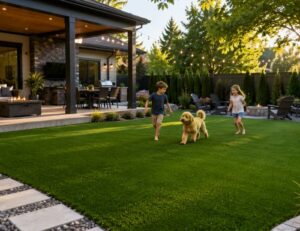
Dogs Aren’t the Only Ones Who Benefit
Pet owners may initially consider artificial turf because they’re frustrated with muddy paws or damaged grass.
But the finished space is still part of the entire household’s backyard.
That means design decisions should account for people too.
Will children use the area?
Do you entertain outside?
Is the turf adjacent to a patio?
Do you want landscaping incorporated around it?
Would you like part of the yard dedicated to another activity?
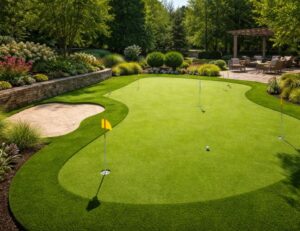
Some homeowners even combine general-purpose turf with recreational features such as a custom backyard putting green.
The goal is to create an outdoor space that supports the household’s lifestyle rather than solving one problem in isolation.
Choose Turf Based on the Application
Artificial turf isn’t necessarily a one-product-fits-every-property purchase.
Different projects can have different performance and aesthetic priorities.
That’s why homeowners should discuss how the area will actually be used.
A decorative section receiving limited foot traffic may have different priorities from a backyard where multiple large dogs play every day.
Elite Turf Systems offers a selection of artificial turf products for different applications.
Professional guidance can help homeowners evaluate their options based on appearance, use, property conditions, and the overall project.
Artificial Turf Can Reduce Lawn-Care Demands
Pet damage isn’t the only maintenance consideration.
Natural lawns require ongoing care regardless of whether you own a dog.
Mowing, watering, fertilizing, repairing bare areas, and other recurring tasks take time and can involve continuing expenses.
Artificial turf replaces many of those lawn-care requirements with a different, generally simpler maintenance routine.
Our breakdown of how artificial turf can save time and money compared with traditional lawn care provides a closer look at this comparison.
For busy pet owners, spending less time repairing grass can mean spending more time enjoying the yard.
Create a Backyard Designed for the Whole Household
A pet-friendly yard shouldn’t have to look like a dog run.
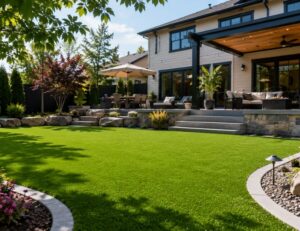
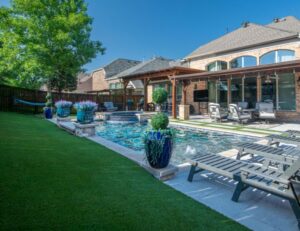
Thoughtful artificial turf design can create an outdoor space that works for pets while still looking polished and intentional.
You can browse the Elite Turf Systems project gallery for examples of completed artificial turf installations.
We serve homeowners throughout numerous Illinois turf installation service areas, providing professionally installed solutions based on each property’s needs.
If you’re tired of muddy paws, worn paths, and constantly repairing grass your dog damages again, contact Elite Turf Systems to discuss options for a cleaner, more pet-friendly backyard.
Key Takeaways
- Active dogs can create worn paths, bare grass, and muddy sections in natural lawns.
- Artificial turf replaces exposed lawn soil with a more consistent outdoor surface.
- Proper drainage and base preparation are especially important for pet areas.
- Solid pet waste still needs to be removed, and pet turf requires routine cleaning.
- Artificial turf can work well in frequently traveled areas such as dog runs, side yards, and spaces near exterior doors.
- Turf selection should reflect how heavily pets and people will use the space.
- Artificial turf can reduce recurring mowing, watering, and lawn-repair demands.
- A professionally designed backyard can accommodate pets without sacrificing the appearance or usability of the overall outdoor space.