
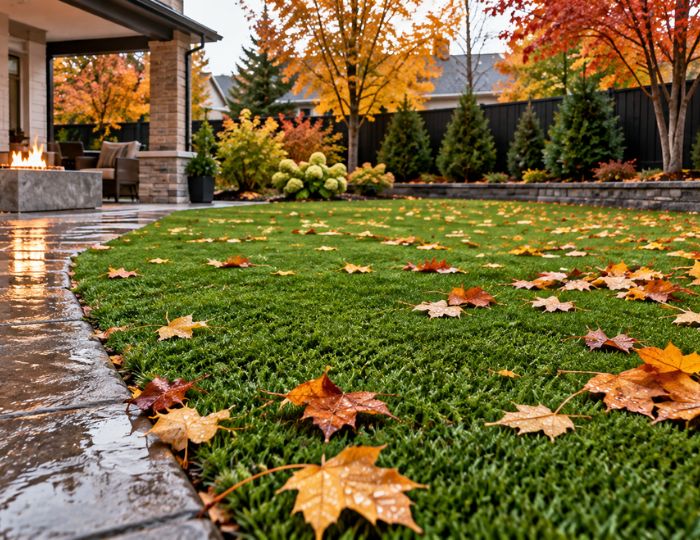
Fall in Illinois can be beautiful, but it can also be messy.
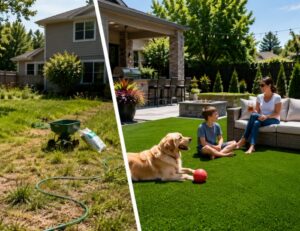
Rain, falling leaves, cooler temperatures, and increasingly wet ground can turn a traditional lawn into a muddy space that homeowners would rather avoid. Dogs track dirt into the house, kids come inside with muddy shoes, and frequently traveled areas can become worn or waterlogged.
One of the advantages of professionally installed artificial turf is that it doesn’t rely on exposed soil and living grass to create a usable lawn surface.
But does that mean artificial turf never gets muddy?
The answer largely comes down to what’s underneath it.
Why Traditional Lawns Get Muddy in Fall
Natural lawns depend on soil, grass roots, drainage, and weather conditions.
After periods of heavy rain, soil can become saturated. Once it reaches that point, additional water has nowhere to go quickly.
Foot traffic can make the problem worse.
Repeatedly walking across wet grass can compact the soil and damage the lawn. Dogs running along the same route can create bare patches. Areas near gates, patios, play equipment, and walkways may receive so much traffic that grass struggles to recover.
As temperatures drop and grass growth slows, damaged areas may not rebound quickly.
Homeowners comparing their options can learn more about these differences in our guide to artificial grass versus natural grass for Illinois properties.
Does Artificial Turf Turn Into Mud?
Artificial turf itself does not grow in soil the way natural grass does.
With a properly prepared base and drainage system, rain can move through the turf rather than remaining trapped on the surface.
That distinction is important.
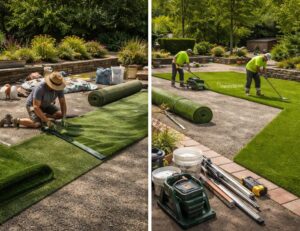
Installing turf isn’t simply a matter of rolling artificial grass over an existing lawn. The preparation underneath the finished surface plays a major role in drainage, stability, appearance, and long-term performance.
This is one reason professional installation matters.
Our comparison of DIY and professional turf installation explains some of the differences between simply laying turf and building a complete system designed for the property.
Drainage Is a Critical Part of Turf Performance
Water still has to go somewhere.
Artificial turf does not eliminate rain, snowmelt, or drainage challenges on the property. Instead, a properly designed installation should account for how water moves through and away from the area.
The Base Matters as Much as the Turf
Homeowners naturally pay attention to how artificial grass looks and feels.
However, the finished turf is only one part of the project.
Site preparation and the underlying base help create a stable surface and support effective drainage. The specific requirements can vary based on the property, existing conditions, intended use, and surrounding landscape.
This is especially important in Illinois, where an outdoor surface needs to deal with substantial seasonal changes.
We discuss those conditions further in our guide to artificial turf performance in Illinois.
What Happens to Artificial Turf During Heavy Rain?
During wet weather, properly installed turf is designed to allow water to drain rather than creating the exposed muddy soil found in a natural lawn.
That can make outdoor areas more usable after rain.
There may still be moisture on the turf immediately following a storm, just as there would be on any outdoor surface. However, homeowners aren’t waiting for saturated soil to become firm enough to walk across without sinking into mud.
For households that frequently use their yards, this can be a meaningful difference.
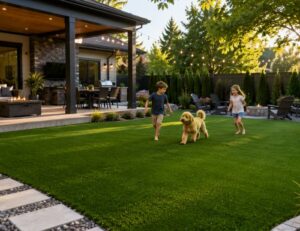
Children can have a more consistent play surface. Dogs don’t have to run through bare soil. Outdoor entertaining areas can remain visually appealing without worn paths appearing after rainy periods.
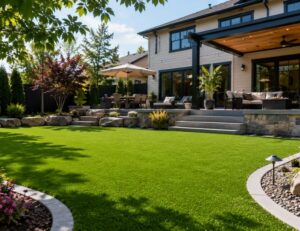
Our residential turf solutions are designed for homeowners looking for an alternative to the maintenance and seasonal challenges of traditional lawns.
What About Fallen Leaves?
Artificial turf is lower maintenance than natural grass, but lower maintenance doesn’t mean zero maintenance.
Leaves still fall on it.
During autumn, allowing large amounts of organic material to remain on any outdoor surface can make the space look untidy.
Routine cleanup helps keep turf looking its best.
Depending on the size of the property and the amount of tree coverage, homeowners may need to remove leaves and other debris periodically throughout fall.
The difference is that you aren’t combining leaf cleanup with many of the other tasks associated with maintaining living grass.
There is no need to keep mowing simply because the lawn continues growing, and you aren’t trying to repair worn grass before winter arrives.
For a broader look at upkeep, see our guide to artificial turf lifespan and maintenance.
Can Artificial Turf Help With High-Traffic Areas?
Some parts of a yard naturally receive more traffic than others.
Common examples include:
- Paths between the house and garage
- Areas near gates
- Spaces around patios
- Children’s play areas
- Dog runs
- Outdoor entertaining spaces
- Routes between doors and backyard features
With natural grass, these areas can become thin or bare.
Once the grass disappears, rain can quickly turn exposed soil into mud.
Artificial turf can provide a more consistent surface in areas where repeated use makes natural grass difficult to maintain.
This is one reason homeowners often look beyond the question of appearance and consider how they actually want to use their yards.
Our article on ways artificial turf can improve outdoor living explores this lifestyle perspective in more detail.
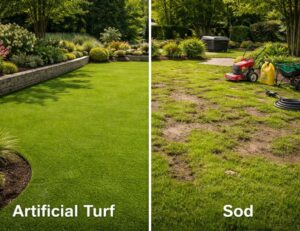
How Does Turf Compare With Sod During Wet Weather?
Sod provides homeowners with an established natural-grass surface faster than growing a lawn from seed.
But it’s still living grass rooted in soil.
That means many of the same weather-related factors remain relevant.
Artificial turf is fundamentally different because it replaces the living lawn rather than restarting it.
For homeowners deciding between the two approaches, our comparison of artificial turf versus sod covers several factors worth considering.
The right choice depends on your property, expectations, budget, and how you want to use the space.
Fall Can Reveal the Weak Spots in Your Yard
Wet autumn weather has a way of showing homeowners exactly where their lawn struggles.
Pay attention after the next substantial rainfall.
Where does water collect?
Which sections become muddy first?
Where does grass appear thin?
Which paths receive the most foot or pet traffic?
Where do you avoid walking because the ground stays wet?
Those observations can be useful when discussing a future turf project.
Elite Turf Systems offers artificial turf products for different applications and provides professional installation for homeowners throughout its service area.
You can also browse our artificial turf project gallery to see completed spaces and gather ideas for your own property.
If fall rain keeps turning parts of your lawn into a muddy mess, contact Elite Turf Systems to discuss whether professionally installed artificial turf makes sense for your outdoor space.
Key Takeaways
- Natural lawns can become muddy when fall rain saturates the underlying soil.
- Artificial turf does not depend on exposed soil and living grass for its finished surface.
- Proper site preparation and drainage are important parts of a successful turf installation.
- Artificial turf still gets wet, but homeowners don’t have the same exposed-soil mud problem found in worn natural lawns.
- Fallen leaves and outdoor debris should still be removed as part of routine turf maintenance.
- Turf can be especially useful in high-traffic areas where natural grass repeatedly becomes thin or bare.
- Professional installation helps ensure the complete turf system is prepared for the property’s conditions.